
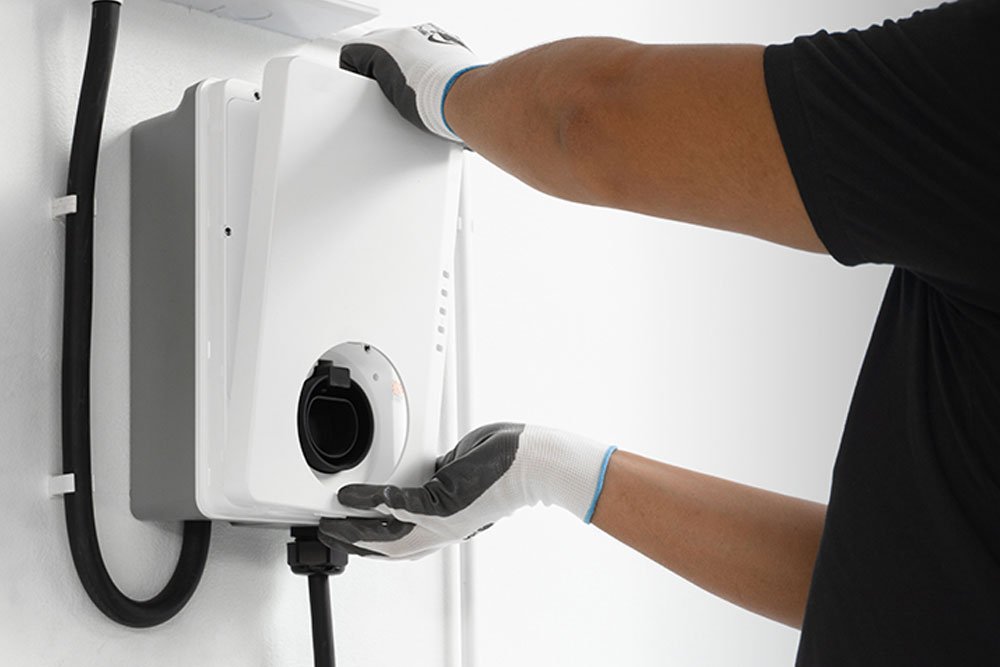
Thinking About Installing a Home EV Charger?
Electric vehicles have become increasingly popular throughout Orange County, and for good reason. Charging your vehicle at home is convenient, saves time, and allows you to start each day with a fully charged battery.
One of the first questions homeowners ask is:
“How much does it cost to install an EV charger?”
The answer depends on several factors, including your home’s electrical system, the location of the charger, and whether your electrical panel has enough capacity to support the additional load.
In this guide, we’ll explain what affects the cost of EV charger installation so you know what to expect before getting started.
Why Most Homeowners Install a Level 2 Charger
While every electric vehicle comes with a standard Level 1 charging cable, most homeowners quickly discover that Level 2 charging is much more practical.
Level 2 chargers:
- Charge significantly faster
- Recharge overnight
- Increase convenience
- Improve daily usability
- Add value to your home
Because they operate on a dedicated 240-volt circuit, Level 2 chargers should always be installed by a licensed electrician.
What Factors Affect EV Charger Installation Cost?
Every home is different, which means installation costs can vary.
Some of the biggest factors include:
- Distance between the electrical panel and charger location
- Available electrical panel capacity
- Existing wiring
- Garage configuration
- Indoor vs. outdoor installation
- Type of charging equipment
- Permit requirements
- Electrical upgrades
A professional evaluation allows your electrician to recommend the safest and most efficient installation for your home.
Does Every Home Need an Electrical Panel Upgrade?
No.
Many homes already have enough electrical capacity for a Level 2 charger.
However, if your electrical panel is older, completely full, or undersized for your home’s current electrical usage, an upgrade may be recommended before installation.
Common situations that may require additional electrical capacity include:
- Older 100-amp electrical service
- Full breaker panels
- Multiple large appliances
- Home additions
- Pools or spas
- Electric HVAC systems
- Future plans for a second EV charger
Your electrician will perform an electrical load calculation before making any recommendations.
What Happens During an EV Charger Installation?
A professional installation includes much more than mounting the charger on the wall.
Typical installation steps include:
Evaluating the Electrical Panel
Your electrician verifies available capacity and breaker space.
Installing a Dedicated Circuit
Level 2 chargers require a dedicated circuit sized specifically for the charging equipment.
Running Electrical Wiring
Depending on the location of the charger, wiring may be installed through walls, attics, garages, crawl spaces, or conduit.
Installing the Charging Equipment
The charger is securely mounted and connected according to manufacturer specifications.
Testing the System
Once installation is complete, the charger is tested to verify safe and reliable operation.
Should You Install the Charger Inside or Outside?
Both options are common.
Garage installations offer protection from the weather and easy overnight charging.
Outdoor installations are also popular when garages aren’t available or when homeowners prefer driveway charging.
Modern charging equipment is available in weather-resistant models designed for outdoor installation.
Can I Install the Charger Myself?
Some homeowners consider installing an EV charger on their own.
However, because Level 2 chargers operate on high-voltage dedicated circuits, professional installation is strongly recommended.
Licensed electricians help ensure:
- Proper breaker sizing
- Correct wire sizing
- Safe grounding
- Code compliance
- Reliable operation
- Manufacturer warranty compliance
Professional installation also helps avoid costly electrical problems later.
Are There Rebates or Incentives?
Utility companies and government agencies occasionally offer rebates or incentive programs for electric vehicle charging equipment.
These programs change over time, so it’s worth checking with:
- Your local utility provider
- State energy programs
- Federal tax incentive resources
- Vehicle manufacturer promotions
Your electrician may also be familiar with current incentive opportunities available in your area.
Is an EV Charger Worth the Investment?
For most electric vehicle owners, the answer is yes.
Benefits include:
- Convenient overnight charging
- Reduced reliance on public charging stations
- Faster charging times
- Increased home value
- Greater flexibility for daily driving
- Preparation for future electric vehicles
Many homeowners find that home charging quickly becomes one of the most appreciated features of owning an electric vehicle.
Why Choose Blanusa Electric?
Blanusa Electric provides professional EV charger installation throughout Orange County.
Our licensed electricians will:
- Evaluate your electrical system
- Determine whether your panel has sufficient capacity
- Install dedicated charging circuits
- Recommend panel upgrades when needed
- Complete code-compliant installations
- Test your charging equipment for safe operation
We believe every homeowner deserves an EV charging system that’s reliable, efficient, and built to last.
Frequently Asked Questions
How long does EV charger installation take?
Most installations can be completed in a single day, although more complex projects involving panel upgrades or long wiring runs may require additional time.
Do I need a permit?
Permit requirements vary depending on the project and local jurisdiction. We help ensure installations meet applicable electrical code requirements.
Can I install a charger outside?
Yes. Many Level 2 chargers are designed specifically for outdoor installation.
Will an EV charger increase my electric bill?
Charging your vehicle will increase electricity usage, but many homeowners find charging at home is still more economical than relying solely on public charging stations. Actual costs depend on your utility rates and driving habits.
Can I charge more than one electric vehicle?
Yes. Many homes can be designed to support multiple EV chargers or future charger installations.
Should I install a larger electrical panel now?
If you’re planning future electrical upgrades, additional appliances, or a second electric vehicle, upgrading your electrical panel now may help avoid additional work later.
Schedule Your EV Charger Consultation Today
Installing a Level 2 EV charger is one of the best upgrades you can make as an electric vehicle owner—but every installation starts with making sure your home’s electrical system is ready.
Blanusa Electric proudly provides professional EV charger installation throughout Orange County, helping homeowners safely prepare their homes for today’s electric vehicles and tomorrow’s technology.
Contact Blanusa Electric today to schedule your EV charger consultation and receive a professional evaluation of your home’s electrical system.