
If You’re Constantly Resetting Your Breaker, Your Electrical System Is Trying to Tell You Something
Few household problems are as frustrating as a circuit breaker that won’t stay on. Maybe it happens every time you use the microwave, plug in a space heater, or run multiple appliances at once. Or perhaps the breaker trips seemingly at random with no obvious cause.
While resetting a breaker may restore power temporarily, repeatedly tripping breakers are often a sign of a larger electrical issue that shouldn’t be ignored.
Circuit breakers are designed to protect your home from overloaded circuits, faulty wiring, and electrical hazards. If yours continues to trip, it’s doing exactly what it was designed to do—protect your home.
Let’s look at the most common reasons circuit breakers trip and when it’s time to have your electrical system professionally inspected.
What Does a Circuit Breaker Actually Do?
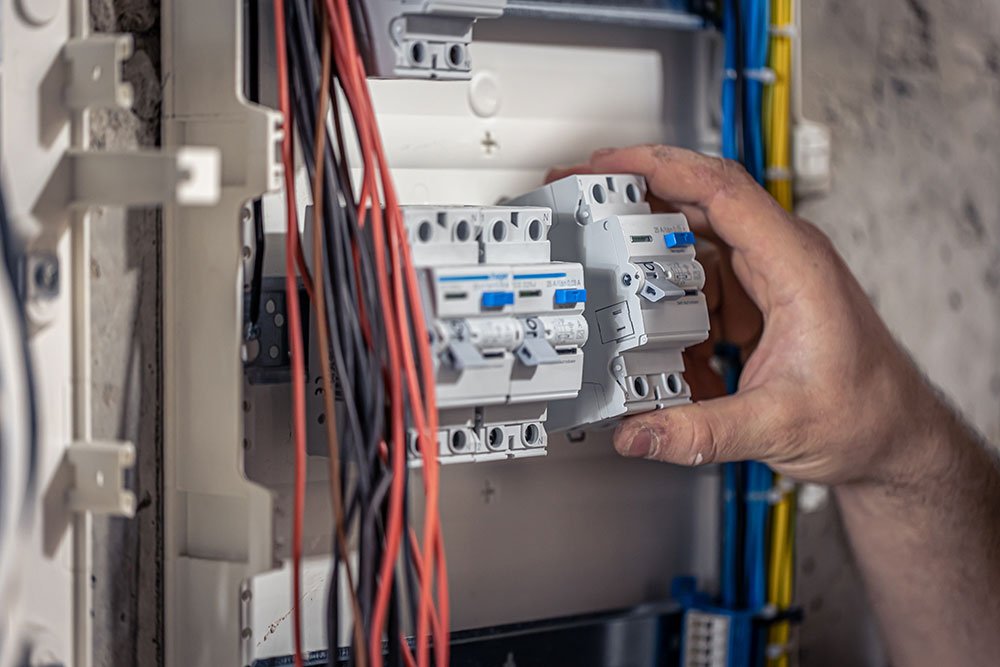
A circuit breaker is a safety device located inside your home’s electrical panel.
Its job is simple:
When too much electricity flows through a circuit—or a dangerous electrical fault occurs—the breaker automatically shuts off power before wires overheat or become damaged.
Without circuit breakers, electrical overloads could create dangerous conditions that increase the risk of electrical fires or damaged equipment.
Although a tripped breaker may be inconvenient, it’s often preventing a much larger problem.
1. You’re Overloading the Circuit
This is the most common reason breakers trip.
Every electrical circuit is designed to handle only a certain amount of electricity.
If several high-powered appliances are running on the same circuit at the same time, the breaker trips to protect the wiring.
Common examples include:
- Microwave + toaster oven
- Space heater + vacuum
- Hair dryer + bathroom heater
- Portable air conditioner
- Multiple kitchen appliances
- Garage workshop equipment
If this happens occasionally, redistributing appliances may solve the problem.
If it happens regularly, your home may benefit from additional dedicated circuits.
2. A Short Circuit
Short circuits occur when electricity travels along an unintended path.
They can happen because of:
- Damaged wiring
- Loose electrical connections
- Faulty switches
- Defective outlets
- Damaged appliances
Short circuits often cause breakers to trip immediately after being reset.
Because they can create significant safety hazards, short circuits should always be professionally diagnosed.
3. A Ground Fault
Ground faults are similar to short circuits but occur when electricity unintentionally contacts a grounded surface.
Ground faults commonly occur in:
- Bathrooms
- Kitchens
- Laundry rooms
- Garages
- Outdoor outlets
GFCI outlets are specifically designed to detect these conditions and shut off power almost instantly.
If a GFCI outlet or breaker repeatedly trips, it’s important to determine the underlying cause rather than continually resetting it.
4. An Aging Circuit Breaker
Like any mechanical component, circuit breakers eventually wear out.
Over time they may:
- Trip too easily
- Fail to reset properly
- Become unreliable
- Show signs of overheating
An electrician can determine whether the breaker itself needs replacement or whether another electrical issue is causing the problem.
5. Your Electrical Panel Is Running Out of Capacity
Many Orange County homes were built decades ago when electrical usage was much lower.
Today’s homes commonly include:
- EV chargers
- Home offices
- Multiple televisions
- Gaming systems
- Larger HVAC units
- Tankless water heaters
- Smart home technology
- Pool equipment
Older electrical panels sometimes struggle to keep up with modern electrical demand.
If multiple breakers trip regularly throughout your home, your electrical panel may no longer provide adequate capacity.
6. A Faulty Appliance
Sometimes the electrical system isn’t the problem.
A defective appliance can draw excessive current and repeatedly trip the breaker connected to that circuit.
Common examples include:
- Refrigerators
- Dishwashers
- Washing machines
- Dryers
- Microwaves
- Portable heaters
- Air conditioners
One way to identify the issue is to unplug everything on the circuit, reset the breaker, and reconnect devices one at a time. If a particular appliance consistently causes the breaker to trip, stop using it until it has been inspected or repaired.
Should You Keep Resetting the Breaker?
Occasionally resetting a breaker after an isolated overload is generally not unusual.
However, if the same breaker trips repeatedly, avoid continuing to reset it without understanding why.
Repeated resets can:
- Hide a developing electrical problem
- Damage electrical equipment
- Increase the risk of overheating
- Delay necessary repairs
If a breaker immediately trips after resetting—or trips frequently without an obvious cause—it should be inspected by a licensed electrician.
Signs You Should Call an Electrician
Contact a professional if:
- The breaker won’t stay on.
- Multiple breakers are tripping.
- You smell burning near the electrical panel.
- Breakers feel unusually warm.
- Lights flicker throughout the home.
- You hear buzzing from the panel.
- The breaker trips with no appliances plugged in.
- You recently added new appliances or equipment.
These warning signs often indicate issues that require professional diagnosis.
How Blanusa Electric Diagnoses Breaker Problems
Rather than simply replacing a breaker, our licensed electricians perform a complete evaluation of your electrical system.
We inspect:
- Circuit breakers
- Electrical panel condition
- Circuit loading
- Wiring connections
- Outlets
- Switches
- Grounding
- Electrical capacity
- Connected appliances
Our goal is to identify the actual cause of the problem so it can be corrected safely and permanently.
Preventing Future Breaker Problems
Many electrical issues can be prevented with routine maintenance and thoughtful planning.
Homeowners can reduce future problems by:
- Avoiding overloaded circuits
- Scheduling periodic electrical inspections
- Upgrading aging electrical panels
- Installing dedicated circuits for high-demand appliances
- Replacing damaged outlets and switches
- Addressing electrical issues promptly
Preventive electrical maintenance often saves homeowners money by identifying problems before they become major repairs.
Frequently Asked Questions
Is it normal for a breaker to trip once in a while?
Yes. Occasional trips caused by temporary overloads are generally normal. Frequent trips, however, should be investigated.
Can I replace a breaker myself?
Electrical panel work should generally be performed by a licensed electrician to ensure safety and compliance with electrical codes.
Why does my breaker trip when I use the microwave?
The microwave may share a circuit with other appliances, creating an overload. An electrician can determine whether a dedicated circuit is needed.
Is a tripping breaker dangerous?
The breaker itself is protecting your home. However, the reason it’s tripping may indicate an electrical issue that should be evaluated.
Can an old electrical panel cause breaker problems?
Yes. Aging panels, worn breakers, and limited electrical capacity can all contribute to recurring breaker trips.
Should I replace my electrical panel if multiple breakers trip?
Not always. A licensed electrician can determine whether repairs, dedicated circuits, or a panel upgrade is the most appropriate solution.
Trust Blanusa Electric for Electrical Troubleshooting
When electrical problems occur, accurate diagnosis is the key to long-term reliability.
Blanusa Electric provides professional electrical troubleshooting services throughout Orange County, helping homeowners identify the cause of recurring breaker trips, overloaded circuits, electrical panel issues, and other electrical concerns.
Whether the solution is a simple repair or a complete panel upgrade, our licensed electricians provide honest recommendations and quality workmanship designed to keep your home safe.
Ready to Solve Your Breaker Problems?
If your circuit breaker continues to trip, don’t ignore the warning signs.
The experienced electricians at Blanusa Electric can inspect your electrical system, identify the root cause of the problem, and recommend the safest, most effective solution.